



In brief:
- Nearshore outsourcing to Costa Rica remains one of Latin America’s most mature and trusted delivery models, providing the talent, digital capabilities, and strong U.S. alignment needed to support complex operations.
- Knowledge-intensive services now account for 58% of the country’s services exports, with North America the #1 market supported.
- Kearney ranks Costa Rica #1 in LATAM for business environment, outperforming leading offshore destinations in stability, ease of doing business, and regulatory environment.
- Costa Rica ranks #2 in LATAM for both English proficiency and skilled talent availability in analyst reports – and #12 globally for digital skills.
Nearshore outsourcing to Costa Rica is gaining momentum as organizations look to balance cost efficiency, talent availability, operational resilience, and closer alignment with core business functions. While offshore locations remain an important part of global delivery networks, many U.S. companies are increasingly leveraging LATAM to improve collaboration, accelerate modernization, and support delivery of higher-value work.
In this environment, Costa Rica stands out as one of the region’s most mature and trusted delivery destinations. With highly educated talent, strong English and digital proficiency, and deep familiarity with U.S. business practices, the country offers more than labor cost savings.
Outsourcing to Costa Rica provides the foundation for greater agility, stronger execution, and the operational stability organizations need to drive long-term growth and transformation.

Costa Rica outsourcing: A mature shared services ecosystem built for North America
Maturity in shared services is not measured by population size alone, but by ecosystem depth, multinational concentration, and delivery experience across functions. By that measure, Costa Rica remains one of LATAM’s earliest, most established, and most influential nearshore service markets.
While the outsourcing industry initially expanded into offshore markets like India for large-scale, transactional work, Costa Rica helped pioneer a different model focused on high-value, English-fluent nearshore operations for North America. Beginning in the late 1990s and early 2000s, major multinational companies such as Intel, Procter & Gamble, and HP established operations in the country, helping position it as a leading destination for outsourcing software development, finance, HR, IT, cybersecurity, customer service, analytics, and other knowledge-based services.
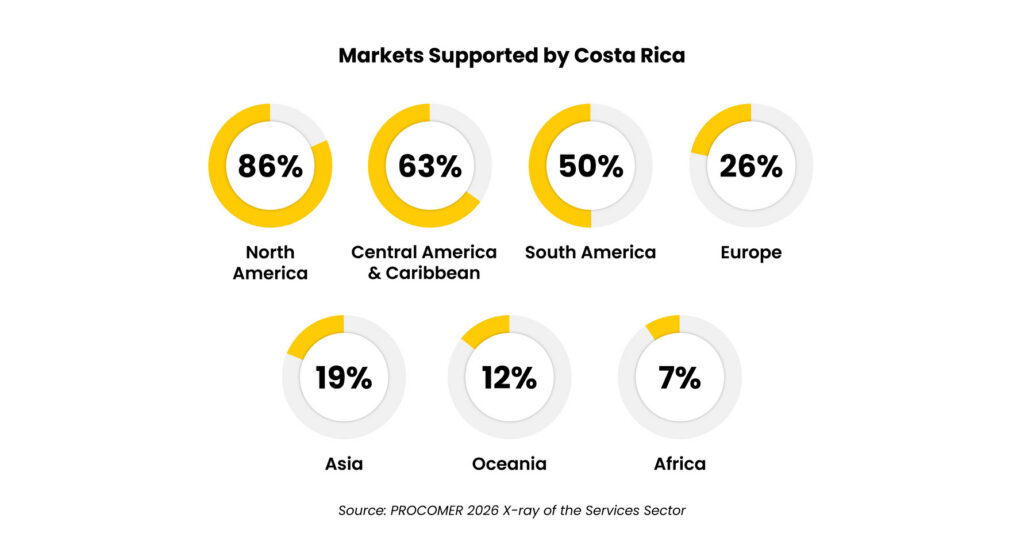
That North America orientation remains one of Costa Rica’s defining strengths. Approximately 86% of Costa Rican shared services operations support North America, according to a 2026 PROCOMER services sector report.
Today, the country is widely recognized as one of the most mature shared services and outsourcing markets for the U.S. It ranks #1 in LATAM for business environment in Kearney’s latest Global Services Location Index – outperforming leading Asia-based destinations like India and the Philippines across key factors including political stability, economic conditions, regulatory environment, and cultural aspects that affect the ease of doing business.
Alongside Chile, Costa Rica also leads LATAM in IMD’s 2026 Latin America and Caribbean Prosperity Rating, which evaluates how effectively countries create sustainable conditions for business performance, management capability, institutional stability, and societal well-being.
Costa Rica ranks #1 in LATAM for business environment, outperforming leading offshore destinations in stability, ease of doing business, and regulatory environment.
Kearney’s Global Services Location Index
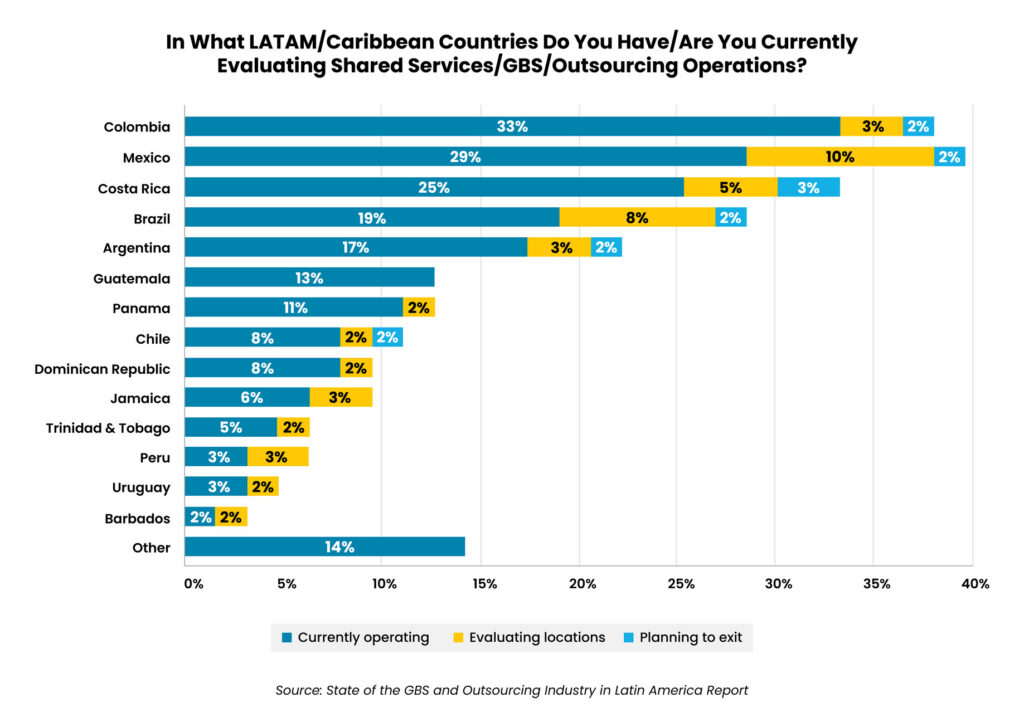
One in four companies operating in Latin America maintains Costa Rican operations – making it the region’s third most popular destination, states the SSON/Auxis State of the GBS and Outsourcing Industry in Latin America report. The country’s services exports have grown 8% annually over the past five years to reach $16.1 billion, accounting for three out of every four GDP dollars (2025 PROCOMER data).
Recent investment activity reinforces that position. In 2025, Costa Rica’s investment agency, CINDE, supported 19 new investment projects and 48 reinvestments across advanced business services, digital technologies, and other high-value operations.
Reinvestment activity is especially significant because it signals long-term confidence in scalability, talent quality, and operational performance. Increasingly, expansions in Costa Rica are supporting higher-complexity, technology-enabled, and analytics-driven work – rather than simply adding transactional volume.
Together, these foundations continue to define Costa Rica’s nearshore value proposition in 2026.
Why is demand for Costa Rica nearshoring rising?
There are many factors influencing the country’s rising demand. Let’s examine the top four reasons U.S. organizations are prioritizing a Costa Rica outsourcing strategy:
1. Highly educated talent and digital strength support complex service delivery
The ability to support complex processes is now the #1 factor in choosing an outsourcing location, cited by 96% of leaders in Grant Thornton’s 2026 Q1 CFO survey. Skilled talent availability follows closely behind at 94%.
As shared services organizations take on broader mandates spanning analytics, AI, and higher-discretion work in 2026, the defining question for location strategy is no longer “Where is labor cheapest?” but “Where can we find the scalable, digitally capable talent needed to support more sophisticated operations?”
Costa Rica’s talent profile aligns closely with this shift. Known for its highly educated and tech-savvy workforce, cultural alignment, and strong English proficiency, the country has built a reputation as one of LATAM’s leading hubs for knowledge-based services and innovation.
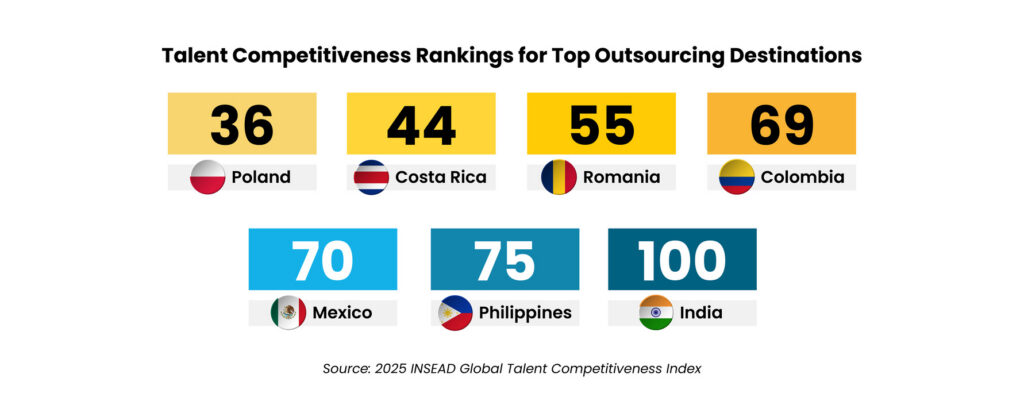
Costa Rica ranks 44th out of 135 countries on INSEAD’s 2025 Global Talent Competitiveness Index (GTCI) – and third in LATAM. That’s significantly ahead of traditional outsourcing markets such as India (100th) and the Philippines (75th), where saturated labor markets often lead to high attrition and skills mismatches for employers.
Despite a population of just 5.3 million, the GTCI highlights Costa Rica’s ability to attract, retain, and grow skilled talent as its primary strength. The report also ranks the country 12th globally for digital skills – a distinction reinforced by CBRE’s 2025 Scoring Tech Talent report, which highlights LATAM as the #1 up-and-coming market for hiring tech talent.
Costa Rica’s capital, San José, ranks #7 among LATAM’s top tech hubs, offering depth across tech functions ranging from traditional help desk and infrastructure roles to support for advanced cybersecurity programs, AI and automation initiatives, and software development projects.
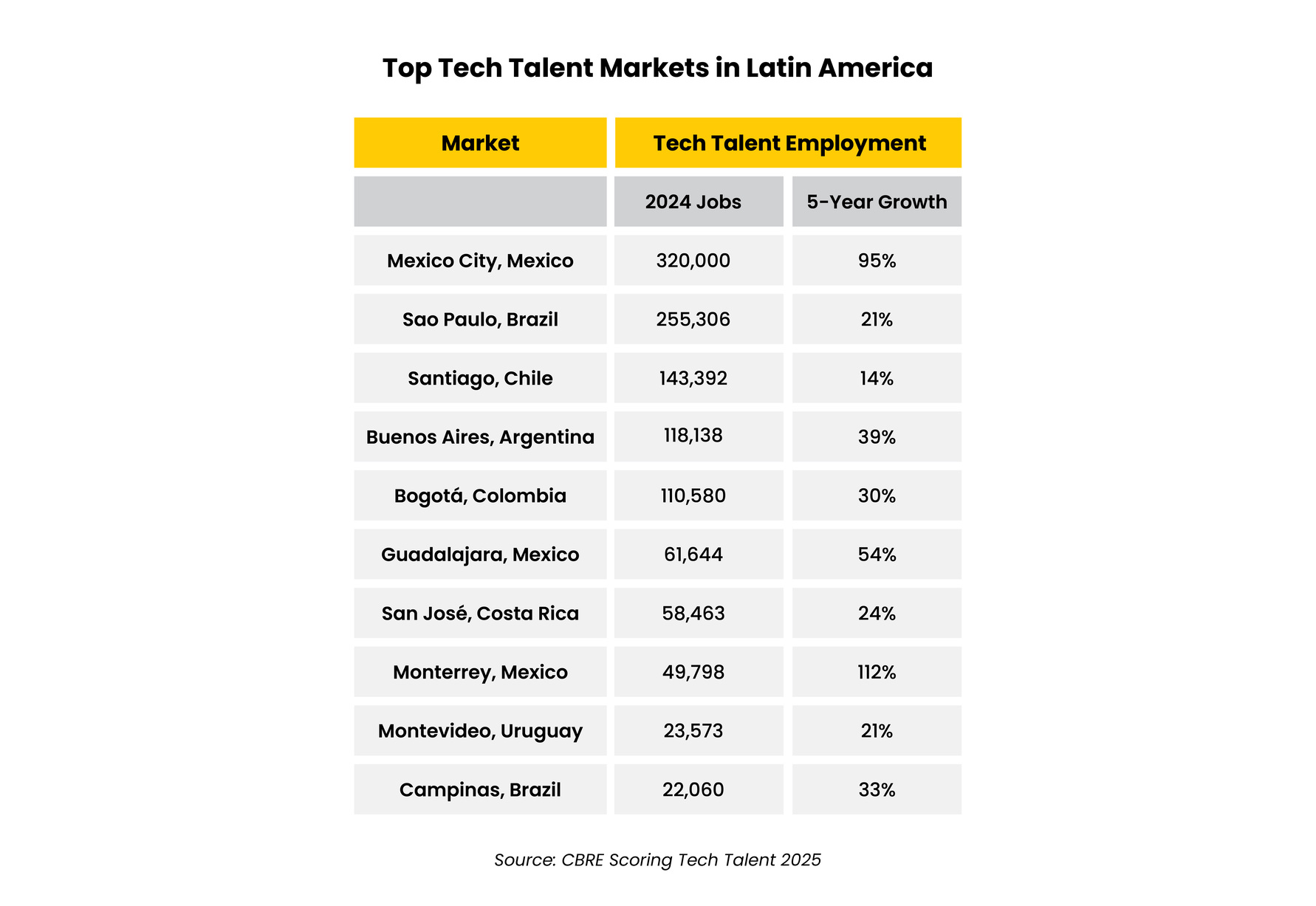
Over time, this talent foundation has enabled multinational organizations to expand beyond transactional work. Knowledge-intensive services now account for 58% of Costa Rica’s services exports, with the country #1 per capita in the Americas for business services exports and #2 for information and communication technology (ICT) services exports, PROCOMER found.
Knowledge-intensive services now account for 58% of Costa Rica’s services exports – expanding by 10% annually.
2025 PROCOMER research
Costa Rican government-backed workforce development programs ensure a steady talent pipeline. Public-private initiatives and educational programs emphasize business, technology, engineering, and multilingual capabilities – with internships starting at the high school level to ensure thousands of highly experienced graduates enter the workforce each year.
Finance and accounting remains a cornerstone of the country’s shared services ecosystem, with business services representing 42% of services exports, PROCOMER reports. Delivery has matured beyond standardized activities into areas such as financial planning and analysis (FP&A), master data management, healthcare revenue cycle management, and digital finance transformation.
Costa Rica’s IT outsourcing industry has also expanded significantly, with digital employment growing 13% annually, according to CINDE data. Support has also evolved into more advanced delivery spanning nearshore software development, cloud engineering, data analytics, AI and automation support, and digital operations.
Costa Rica has also emerged as the leading HR outsourcing destination for the U.S. Decades of multinational investment created a deep pool of professionals with the same U.S. HR fluency and experience at a lower cost.
In contrast, many offshore markets struggle to support U.S.-centric HR functions due to significant time zone gaps, communication barriers, and less familiarity with North American practices and regulations. As a result, a growing number of organizations are shifting to nearshore models for closer alignment with business needs and employee expectations.
LATAM shared services now perform processes on a greater scale than their global counterparts.
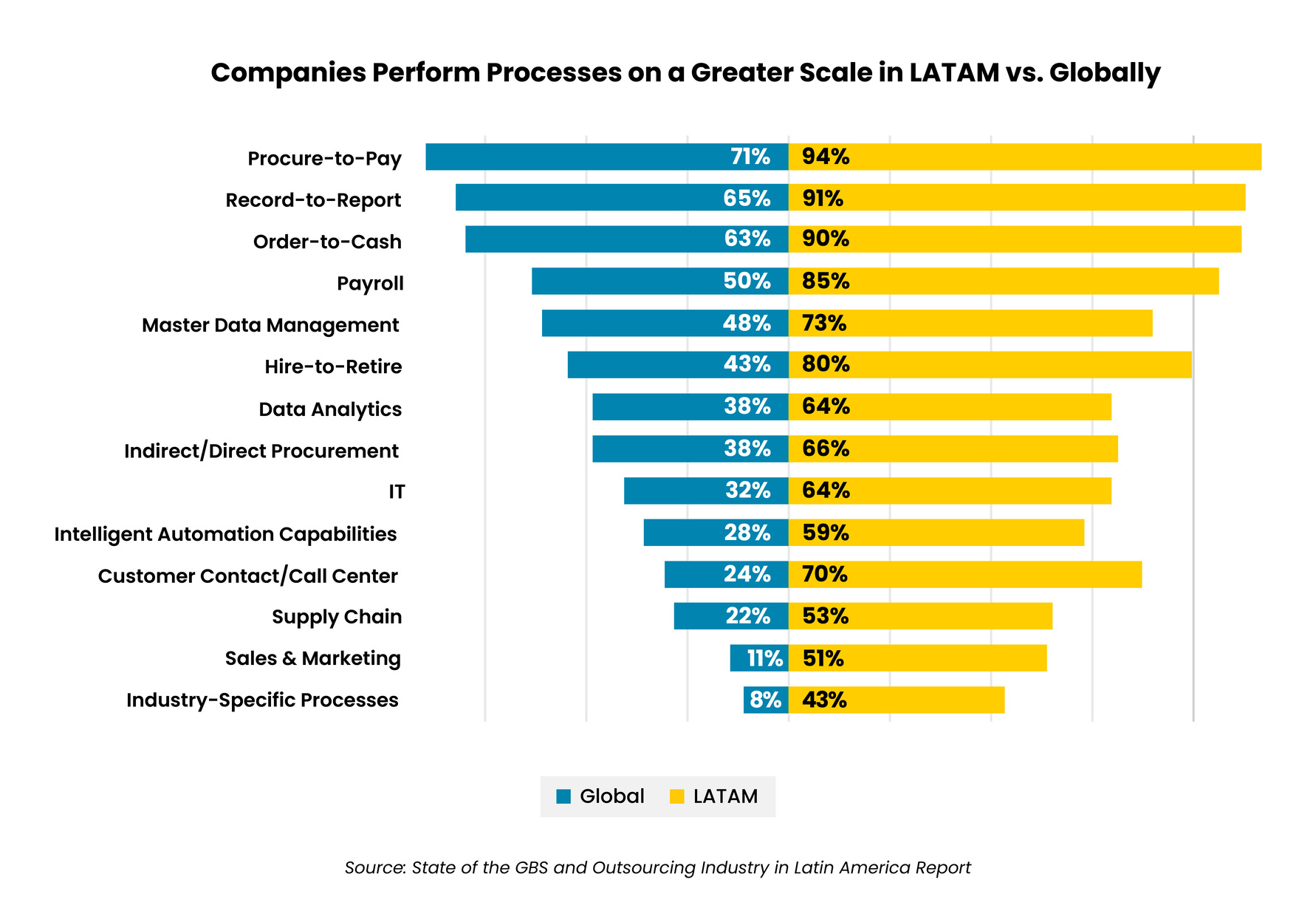
Costa Rica’s talent advantages are reinforced by a modern digital infrastructure built for hybrid work models. As top talent increasingly prioritizes workplace flexibility, internet penetration has reached 92.6% of the population and mobile broadband penetration now extends to nearly the entire country – ensuring reliable connectivity for distributed teams.
The April 2026 Speedtest Global Index ranks Costa Rica 45th worldwide for internet speed, with median fixed broadband speeds of 170.82 Mpbs. It significantly outperforms offshore destinations like India (101st at 61.74 Mbps) and the Philippines (64th at 111.11 Mbps), where connectivity can be less consistent outside major business districts and corporate campuses.
Connectivity is even stronger in Costa Rica’s major business hubs. In San José, fixed broadband speeds average 192.59 Mpbs with latency as low as 4 ms, enabling seamless communication with global teams.
Supported by nationwide fiber-optic infrastructure, strong cybersecurity capabilities that drive data security, and multiple submarine fiber-optic cables that enable secure, high-capacity connectivity, outsourcing to Costa Rica delivers the talent and infrastructure capable of supporting digital transformation and higher-value enterprise functions.
2. Language, cultural, and real-time alignment create seamless extensions of North American teams
As shared services expands into higher-value work, communication quality has become a strategic differentiator. Time zone overlap, language fluency, and cultural alignment influence execution speed, stakeholder satisfaction, and the ability to manage complex processes with minimal friction.
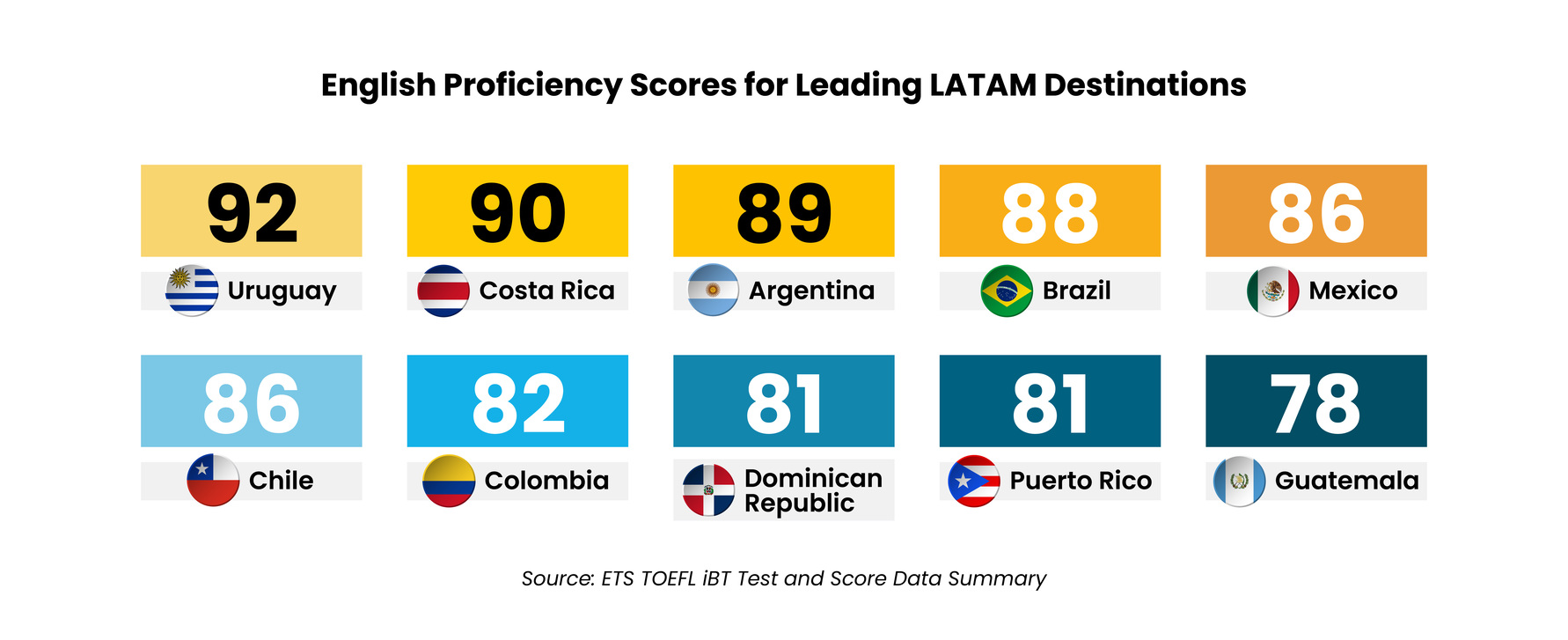
Costa Rica’s strong English proficiency has long been one of its defining advantages. The country earned the second-highest English proficiency score in LATAM on the latest ETS TOEFL iBT, one of the most widely used English proficiency assessments.
With a score of 90, Costa Rica trails the U.S. by just one point – underscoring its ability to support North America-facing operations.
Costa Rica’s English proficiency rivals the U.S., ranking second in Latin America with a TOEFL iBT score of 90 – just one point behind the U.S.
ETS TOEFL iBT Test and Score Data Summary
Other global assessments reinforce this strength. Costa Rica consistently ranks among the region’s strongest performers on the EF English Proficiency Index (EPI), with a 2025 score of 516 compared to the global average of 488.
Scores are even higher in major business hubs like Heredia (576) and San José (546), and across professionals in key functions including IT (604), HR (591), Operations (586), and Customer Service (574).
Costa Rican professionals are also known for their neutral, American-friendly accents, helping improve customer experiences and reducing miscommunication. Beyond English and Spanish, Costa Rica supports multilingual delivery across Portuguese, French, German, Mandarin, Japanese, and more – allowing multinationals to serve global markets from a single strategic location.
Of course, language proficiency is only part of the equation. As shared services take on more business-partnering responsibilities, cultural alignment also becomes increasingly important.
Seemingly minor discrepancies in approaches to completing tasks, communication styles, attitudes toward conflict, and decision-making can lead to miscommunication and frustration between U.S. and offshore teams. More than 70% of international ventures fail due to cultural misalignment impacting service quality.
Notably, nearly 70% of organizations cite cultural affinity as LATAM’s greatest advantage over Asia for outsourcing, according to SSON and Auxis research.
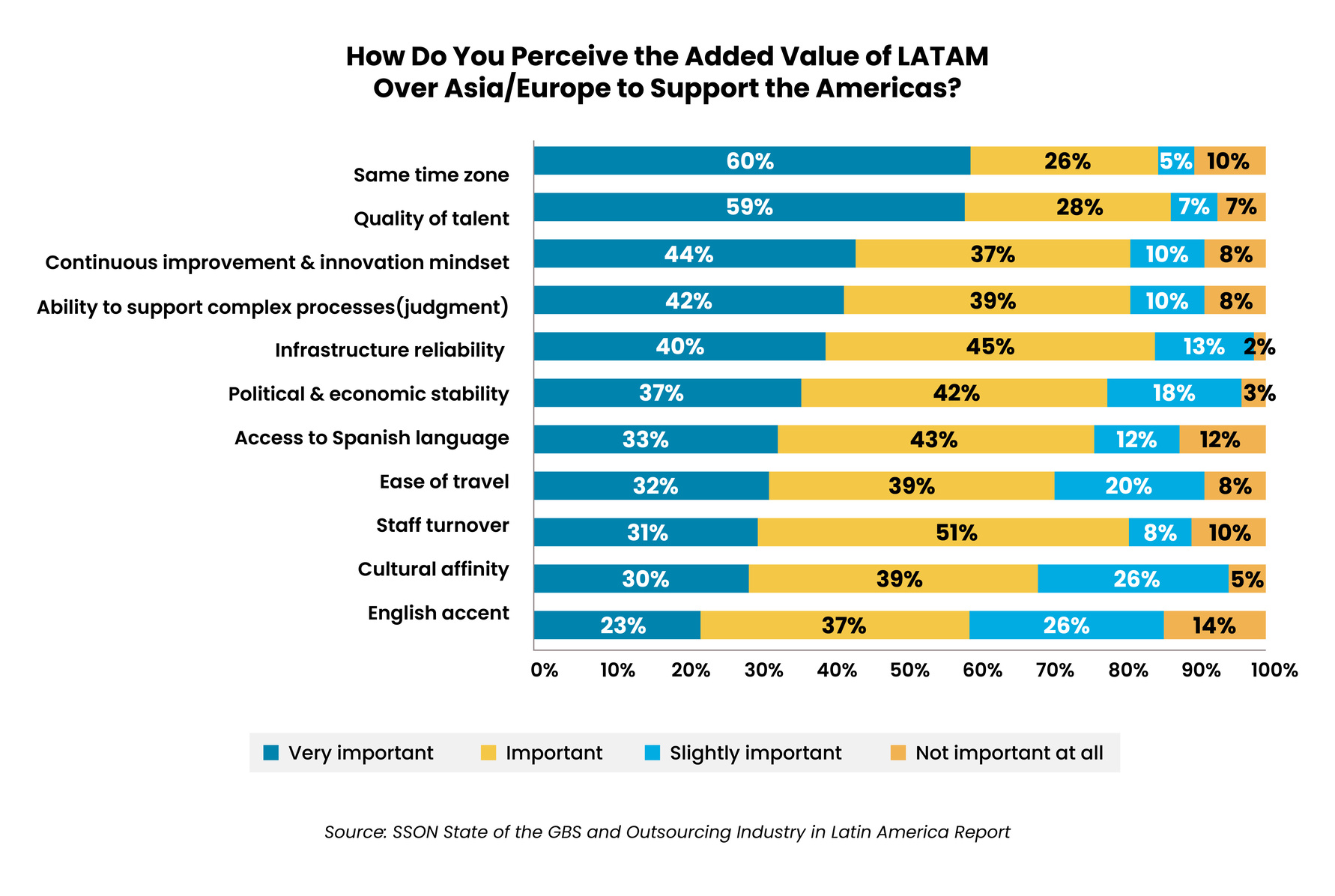
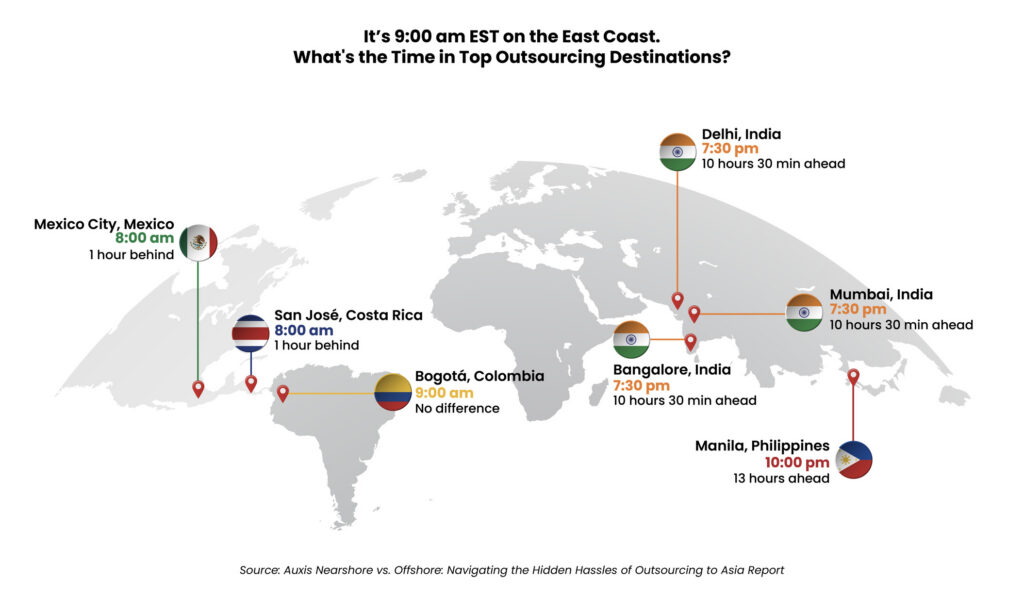
Costa Rica’s geographic proximity further strengthens collaboration. Operating within U.S.-aligned time zones enables real-time communication, faster decision-making, quicker issue resolution, and seamless integration with onshore teams – an advantage 60% of U.S. leaders identify as Latin America’s greatest value (SSON/Auxis report).
Unlike offshore delivery models that often rely on overnight shifts or asynchronous workflows, Costa Rican teams work during North American business hours. This not only improves responsiveness but also helps avoid the higher attrition and talent quality challenges that can arise when employees are required to work overnight schedules.
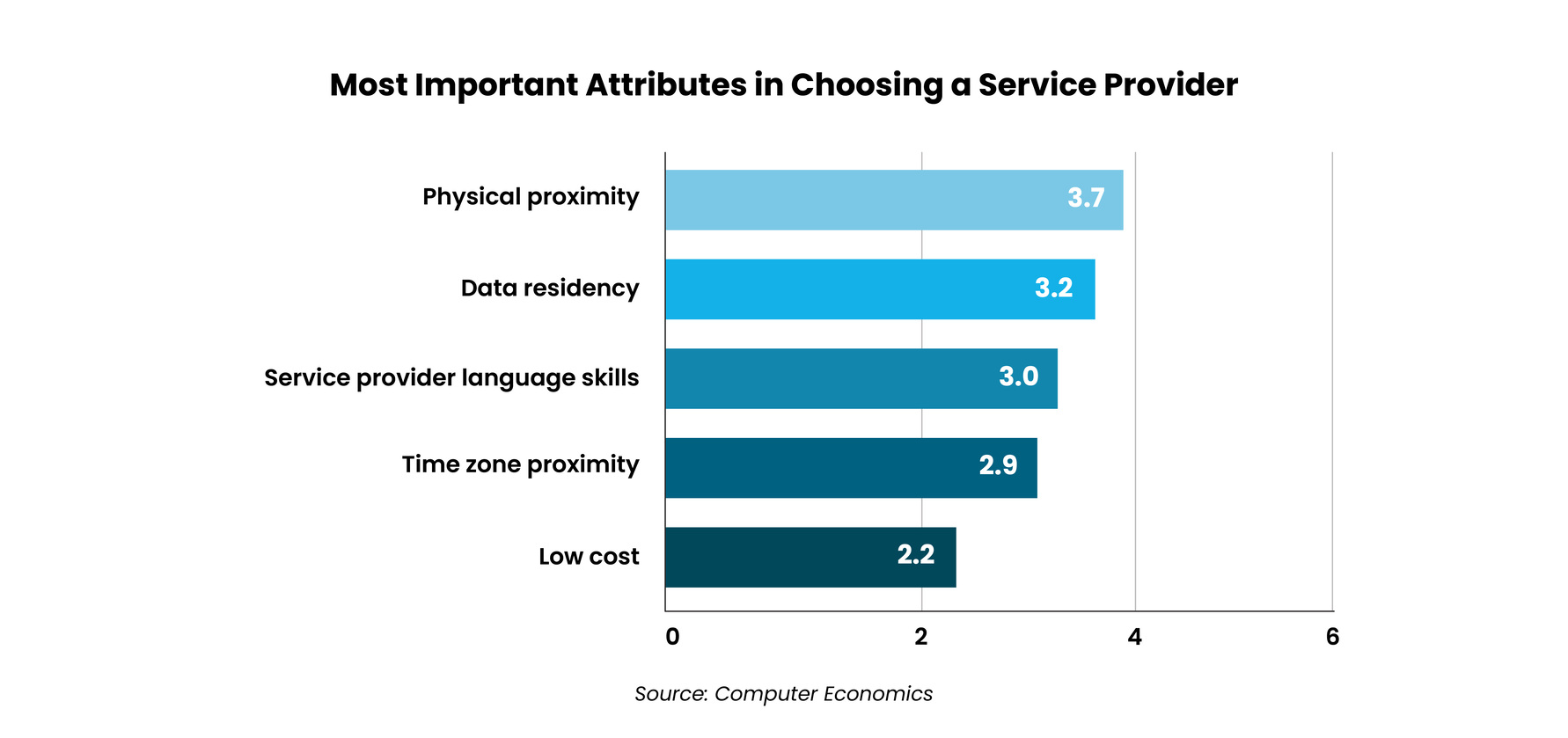
For functions that require urgency and rapid decision-making, proximity provides an even greater advantage. Recent IT outsourcing trends point to proximity as the top factor for selecting an outsourcing partner due to reduced operational challenges, even when lower-cost options exist in more distant locations.
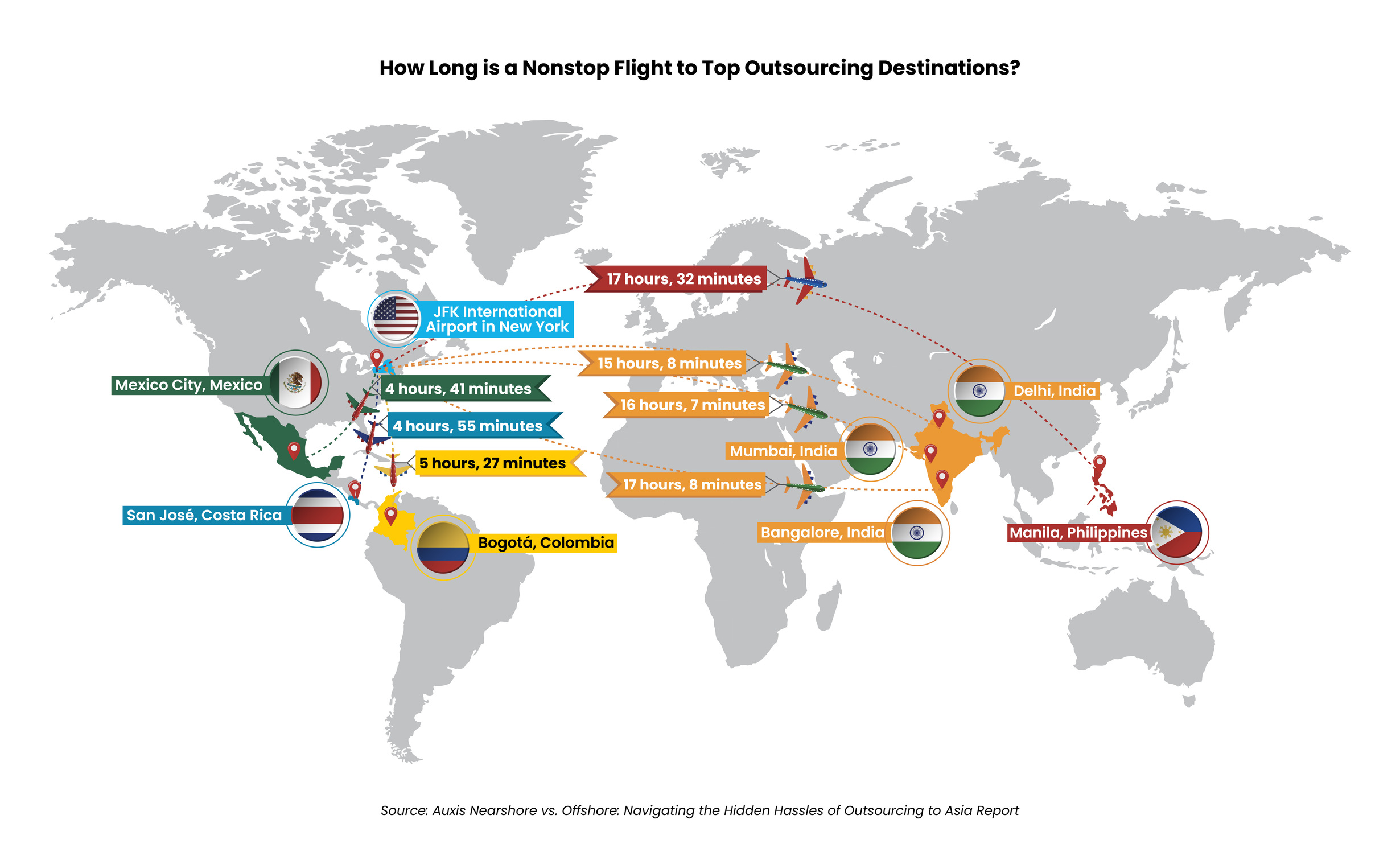
Physical proximity also makes in-person engagement far more practical. Costa Rica is just a three- to six-hour flight from most major U.S. cities, with round-trip airfare typically costing $400-$600. Compared to Asia, where travel can require 15–24+ hours and the business-class fares preferred to accommodate long flights can exceed $10,000, Costa Rica offers a dramatically more accessible and cost-effective option for executive oversight, relationship building, and operational governance.
Proximity still matters in a digital world. As organizations place greater emphasis on collaboration, service quality, and business alignment, Costa Rica’s time zone compatibility, English fluency, and cultural alignment differentiates it as a leading destination for U.S. companies.
3. Solid investment climate, stability, and free trade zone advantages
While talent and delivery capabilities drive most location decisions in 2026, the broader business environment remains critical to long-term success. Costa Rica distinguishes itself through a combination of institutional stability, regulatory continuity, and investment-friendly policies that reduce risk for multinational organizations.
Costa Rica is recognized as the fourth-most peaceful country in the Americas (54th globally) in the 2025 Global Peace Index and 23rd among emerging markets in Kearney’s 2025 Foreign Investment Confidence Index.
Together, these rankings reflect safety and stability that lowers the risk of regulatory disruption, policy volatility, and other uncertainties that can affect business continuity and long-term investment decisions.
As one of the safest and most politically stable countries globally, Costa Rica offers a lower-risk environment for long-term shared services and outsourcing investments.
Costa Rica’s Free Trade Zone (FTZ) regime further strengthens its value proposition. In addition to tax incentives and exemptions for qualifying activities, the program includes workforce development initiatives such as the Human Talent Incentive Program, which co-finances 50% to 90% of technical and professional training costs for participating companies.
Combined with legal certainty and a mature multinational ecosystem, FTZ advantages help organizations lower operating costs while encouraging investment, scaling, and growth of high-value business operations.
Perhaps most importantly, nearshore outsourcing to Costa Rica offers predictability. Decades of political stability, regulatory consistency, and sustained multinational investment have created a favorable business environment where organizations can plan, invest, and scale with confidence.
As resilience and geographic diversification become increasingly important in global delivery strategies, a stable legal and investment framework can be just as valuable as labor cost advantages. For C-suite and GBS leaders, Costa Rica’s combination of talent, incentives, and institutional stability provides a lower-risk platform for long-term growth.
4. Value beyond cost efficiency
Cost still matters in 2026, but it is no longer the sole lens through which organizations evaluate location strategy. Only 34% of leaders cited cost reduction as the biggest benefit of outsourcing on the 2026 Q1 Grant Thornton CFO Survey, while 68% prioritized more strategic drivers.
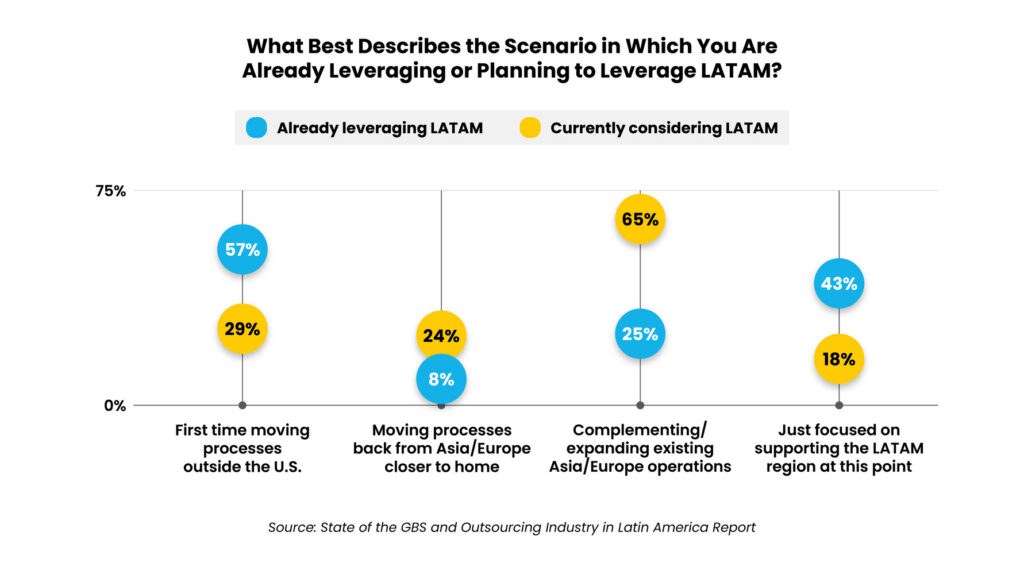
The SSON/Auxis report found 65% of organizations evaluating Latin America are looking to expand or complement Asia-based operations to reduce risk, improve collaboration, access specialized talent, and support more complex process delivery.
Within nearshore outsourcing, Costa Rica plays a distinct role. The country offers meaningful labor arbitrage compared to the U.S., typically averaging 30% to 45%.
While it may not be the lowest-cost market in Latin America, organizations increasingly evaluate locations based on total value rather than labor rates alone. Factors such as talent quality, communication capabilities, employee retention, productivity, collaboration, travel requirements, and service quality can have significant impact on long-term operating costs and business outcomes.
These considerations become even more important as organizations expand beyond transactional activities into advanced processes, software development services, digital operations, and customer-facing activities. In these environments, higher productivity, stronger execution, and lower risk often generate greater business value than simply securing the lowest hourly labor rate.
Costa Rica’s robust digital capabilities further strengthen its business case. Through process optimization, automation, and continuous improvement initiatives, organizations frequently realize an additional 10%-20% productivity gains beyond labor savings alone.
Nearshore outsourcing to a quality partner can also lower costs by helping fund modernization. By embedding automation and AI directly into delivery operations, organizations can use outsourcing efficiencies to offset transformation costs while reducing implementation risk through established governance, performance metrics, and operational accountability.
Multi-location delivery models are also increasingly used to maximize both cost and capability. In these arrangements, Costa Rica nearshoring often serves as a hub for higher-complexity functions, while larger, lower-cost markets like Colombia support more transactional work.
This allows organizations to align processes to the location best suited to their talent, collaboration, and operational requirements.
The result is a delivery model focused not simply on reducing costs, but on improving performance. As organizations place greater emphasis on quality, agility, resilience, and transformation, Costa Rica continues to stand out as a high-value destination for sophisticated shared services and outsourcing operations.
Why Auxis: The right partner for Costa Rica outsourcing success
In 2026, outsourcing decisions are increasingly driven by talent, resilience, and execution quality – not just cost.
With decades of multinational investment, a highly skilled workforce, strong English proficiency, North American alignment, robust digital capabilities, and an attractive business environment, Costa Rica remains one of Latin America’s most mature and trusted nearshore destinations.
Auxis Grant Thornton helps organizations capitalize on these advantages. Recognized by industry analysts such as Everest Group and ISG as a nearshore leader and pioneer, Auxis combines deep regional expertise with an integrated delivery platform spanning Costa Rica, Colombia, and other leading LATAM markets.
In fact, Auxis is spotlighted as one of the only true Latin America-centric providers among the world’s top outsourcing companies in the analyst reports. As part of Grant Thornton, Auxis also provides access to a broader global delivery network, enabling organizations to align work to the right location as business needs evolve.
For organizations seeking to move beyond transactional work and build more agile, scalable, and transformation-ready operating models, nearshoring to Costa Rica offers a compelling path forward – and success depends on selecting a partner with the experience, talent, and regional expertise to unlock its full potential.
Ready to explore how nearshore outsourcing to Costa Rica can support your business? Schedule a consultation with our experts or visit our resource center to learn more about our nearshore capabilities and client success stories.
Frequently Asked Questions
Why do U.S. companies outsource to Costa Rica?
Is Costa Rica a good location for higher-value shared services work?
How does Costa Rica compare with other nearshore markets in Latin America?
What functions are commonly outsourced to Costa Rica?
How much does nearshore outsourcing to Costa Rica cost?
