

In brief:
- Colombian cities have emerged as leading nearshore outsourcing destinations, combining deep talent pools with cost efficiency, real-time collaboration, strong infrastructure, and cultural alignment.
- Bogotá, Medellín, Barranquilla, Cali, and Bucaramanga stand out as the best nearshore cities in Colombia for shared services – bringing different strengths across scalability, infrastructure, and specialized capabilities.
- There is no single “best” choice among Colombia’s top cities. The right location depends on the work being performed, required skills, and strategic priorities.
- Multi-city strategies are increasingly common, tapping the distinct strengths of top talent professionals in Colombia’s cities while improving flexibility, resilience, and scale.
Colombia’s best nearshore cities are becoming increasingly important to global delivery strategies as U.S. companies look beyond cost savings to specialized talent, technology, and broader business value.
Colombia ranks #1 among companies already operating shared services in Latin American countries – and #2 among businesses exploring the region, according to the State of the GBS & Outsourcing Industry in Latin America report by the Shared Services and Outsourcing Network (SSON) and Auxis Grant Thornton.
What’s driving its popularity? Colombia combines real-time collaboration, cultural alignment, and agility with Latin America’s third-largest skilled talent pool. It also ranks #1 for financial attractiveness among Latin America’s leading destinations in Kearney’s Global Services Location Index – reinforcing its status among the world’s fastest-growing international hiring markets.
Safety and security confidence are also strong. Colombia earned 87.8% confidence in the safety of foreign business travelers in the 2025 Offshore CX Confidence Index – outperforming other major outsourcing destinations, including the Philippines.
As interest in the country grows, this blog explores Colombia’s leading nearshoring markets – highlighting their distinct strengths, skill sets, and strategic advantages to help identify the best fit for your business’ growth and outsourcing goals.
What are the best nearshore cities in Colombia?
Colombia’s large and geographically diverse urban network gives companies multiple options for building distributed delivery operations. Six metropolitan areas have populations above 1 million while 15 exceed 500,000, creating a broad base of top talent professionals in Colombia beyond a single dominant city.
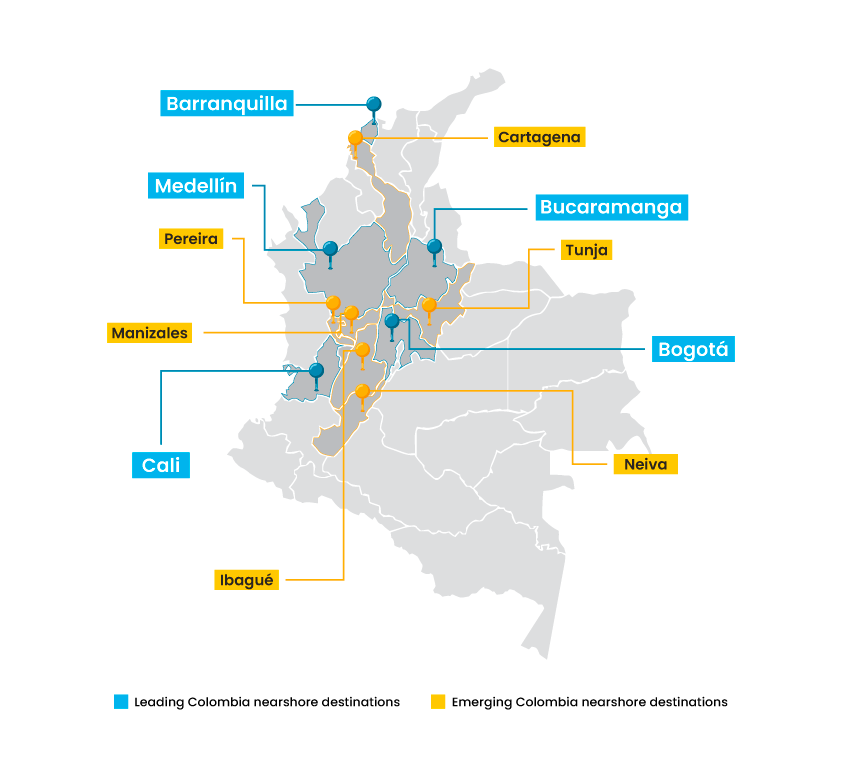
Leading business and technology hubs include Bogotá, Medellín, Barranquilla, and Cali, while emerging markets such as Bucaramanga are expanding the country’s nearshoring footprint. These cities include Colombia’s national capital and the capitals of some of its most prominent departments (similar to states or provinces).
Below we explore each of Colombia’s top cities in more detail:

Bogotá: At a Glance
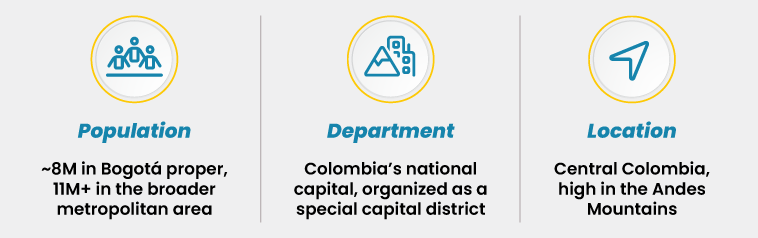


Colombia’s capital and largest business center, Bogotá has emerged as one of Latin America’s leading destinations for shared services, technology, and business operations. The city combines one of the region’s largest bilingual talent pools with strong digital infrastructure, global connectivity, and one of Latin America’s greatest concentrations of multinational companies.
Bogotá has consistently topped the Cities Competitiveness Index, which evaluates the capitals of Colombia’s 32 departments and seven metropolitan areas across a range of competitiveness measures. The city’s performance is supported by strengths in higher education and workforce training, English proficiency, air connectivity, business environment, and innovation.
Talent depth is a major differentiator. Dozens of universities and higher education institutions sustain a steady pipeline, with more than 80,000 graduates annually in disciplines related to shared services.
Bogotá accounts for 39% of Colombia’s business and economics-related graduates and 31% of its STEM talent, according to 2026 Invest in Bogotá research. CBRE ranks Bogotá as the fifth-largest tech talent market in Latin America, with advanced capabilities across data science, software development, and AI.
That pipeline supports increasingly sophisticated work across finance, procurement, AI, technology, HR, analytics, and other enterprise functions, with the large number of multinational companies within its borders creating deep familiarity with U.S. business practices. The Bogotá capital district also ranks highest among Colombia’s regions for English proficiency on the latest EF English Proficiency Index, a respected global measure of English fluency.
Bogotá offers a level of corporate services maturity that few regional locations can match. The city is home to 70% of Colombia’s global business services (GBS) operations – the third-largest GBS concentration in Latin America, according to a 2026 Invest in Bogotá study.

That maturity is increasingly important as GBS operations move beyond transactional work to become core engines of enterprise execution, taking on more complex analytics, decision support, and front-facing activities. As companies navigate persistent talent shortages, evolving hiring processes, rising service expectations, and accelerating digital change, Bogotá offers the specialized skills and ecosystem needed to support AI-enabled, multi-location, and higher-value operations.
Government support also continues to strengthen the city’s BPO, KPO, and technology sectors through funding opportunities, tax incentives, and entrepreneurship programs. For instance, qualifying digital services exported for use outside Colombia – including software development and customer support – can be eligible for Value-Added Tax (VAT) exemptions.
These advantages are attracting growing international investment. Corporate services, software and IT services, and retail and consumer products accounted for 69% of foreign investment projects arriving in Bogotá in 2025, with the U.S. the leading source of investment, Invest in Bogotá reports.
Strong air and digital connectivity add another advantage. Bogotá ranks 29th out of 194 international cities on the Speedtest Global Index, with median fixed broadband speeds of 257.59 Mbps and 5 ms latency, while the El Dorado International Airport provides extensive nonstop access to global markets.
For companies building or expanding Latin America delivery strategies, Bogotá offers the scale and sophistication to support both mature shared services operations and increasingly complex, transformation-focused work.

Medellín: At a Glance
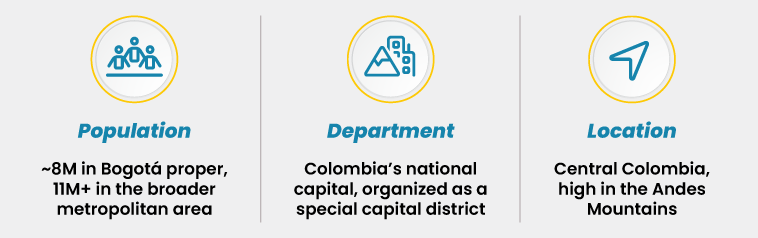
The second-largest city in Colombia, Medellín has emerged as one of Latin America’s most prominent technology and innovation hubs. Ranking second on Colombia’s Cities Competitiveness Index, the city combines a deep base of specialized technology talent with strong digital infrastructure, a highly developed innovation ecosystem, and sustained public and private investment in science, technology, and entrepreneurship.
Medellín’s transformation into a technology center has been years in the making. Chosen as the world’s most innovative city by The Wall Street Journal and Citi in 2013, Medellín set an ambitious goal to become a leading global destination for technology investment and knowledge-based services.
A cornerstone of that strategy is Ruta N, an innovation and business center created to attract global companies, support startups, and strengthen collaboration among business, government, universities, and research institutions.
The city’s ecosystem received another boost in 2021, when Medellín became Colombia’s only Special District of Science, Technology, and Innovation. That designation strengthens the city’s ability to attract investment and support innovation, including tax benefits and incentives for companies engaged in science, tech, and other relevant activities.
Talent is a major advantage. Medellín is the capital of Antioquia, a region with more than 100 higher education institutions and technical training centers. This deep educational network supports a growing workforce in specialized tech disciplines including software development, cybersecurity, cloud, and data science, while also supplying talent for finance, customer operations, shared services, and other higher-value business functions.
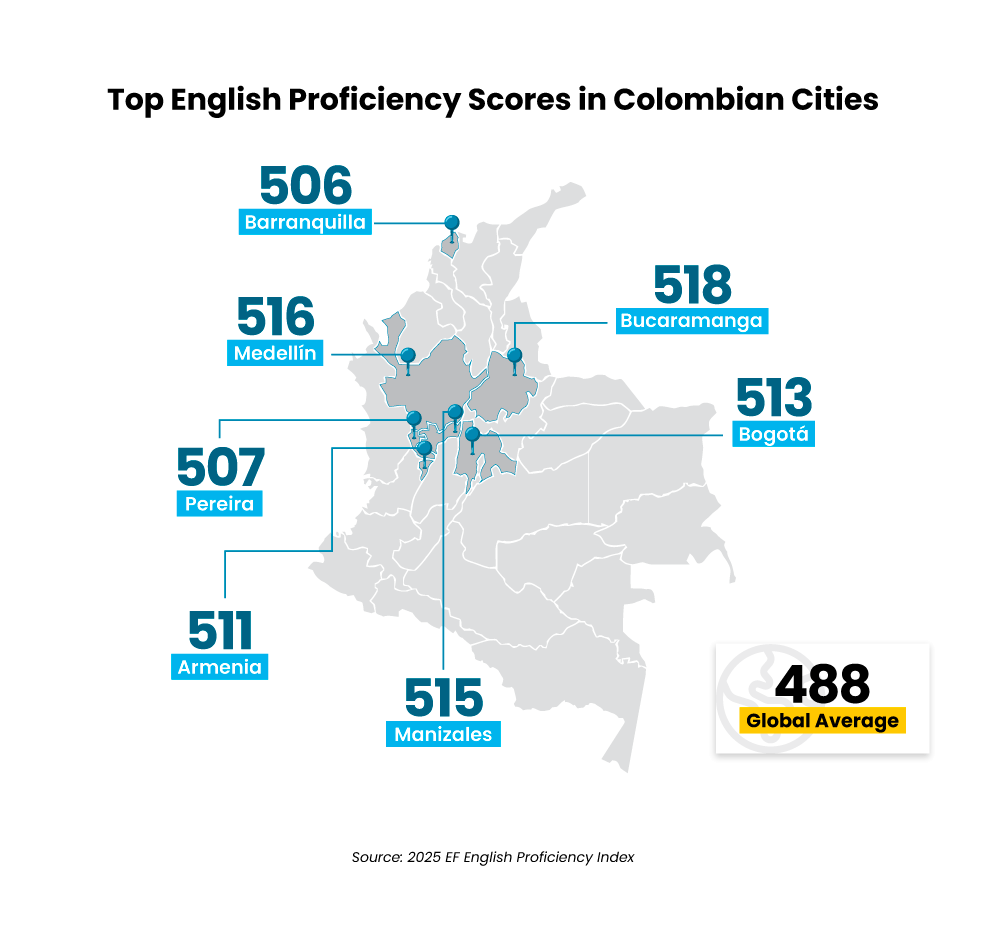
The region’s workforce also benefits from strong bilingual capabilities. Medellín scored 516 on the latest EF English Proficiency Index – the second-highest score in Colombia and well above the global average.
Colombia’s fastest internet speeds provide another critical advantage. Medellín ranked 25th globally in the 2026 Global Speedtest Index, with median fixed broadband speeds of 270.40 Mbps and 5 ms latency. Smart-city investments in digital infrastructure reinforce its reputation as a highly connected, innovation-driven city.
Not surprisingly, KPMG’s Colombia Tech Report 2026 ranks Medellín as the best destination in Latin America for technology business development. The city has attracted $4.62 billion in foreign investment projects since 2008, with technology services accounting for the largest share, according to investment promotion agency ACI Medellín.
The KPMG report largely credits Medellín’s strong performance to its highly connected innovation ecosystem. Sector-focused clusters bring companies together with universities, research centers, and suppliers to develop specialized capabilities, strengthen value chains, and respond quickly to changing business needs.
For companies evaluating nearshore technology and business services locations, Medellín offers a compelling combination: specialized talent, a mature technology ecosystem, a growing business services and shared services sector, strong institutional support, competitive economics, and close connectivity to North American markets. These strengths make the city well-suited for complex, digital-first work that requires more than transactional delivery.

Barranquilla: At a Glance
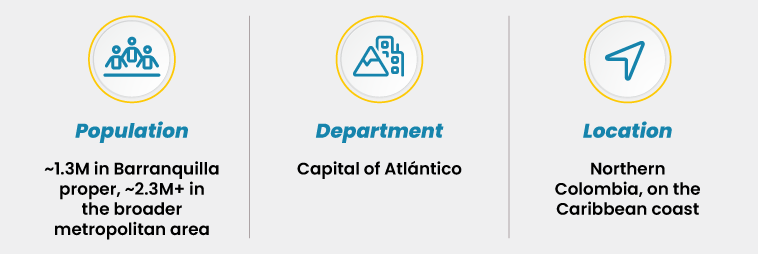
Barranquilla is emerging as a leading digital and business services center in northern Colombia. A prominent industrial and trade center due to its strategic location on the Caribbean coast, the city has evolved into a popular destination for BPO, KPO, IT, engineering, and back-office services seeking competitive talent, strong connectivity, and proximity to North America.
Its investment momentum is notable. Barranquilla ranks 27th globally and third in Latin America and the Caribbean among the 100 fastest-growing destinations for foreign direct investment (FDI), according to the latest fDI Markets report. The city attracted more than $469 million in FDI in 2025, with the services sector – including BPO and IT – accounting for nearly a third of that share.
Atlántico’s four permanent free trade zones strengthen the city’s investment appeal with incentives designed to attract internationally oriented businesses. That includes customs and VAT exemptions and a 30% income tax discount on qualifying science and technology projects.
A growing talent pipeline supports that expansion, with strengths across business, technology, engineering, and healthcare. Barranquilla is home to Universidad Simón Bolívar and Universidad del Norte, ranked among the top universities in Colombia and across Latin America. It also benefits from the broader network of higher-education institutions across the surrounding Atlántico department.
Strong emphasis on English proficiency to reduce language barriers is another distinctive advantage. Barranquilla has made English-language development a long-term economic and workforce priority, becoming the first Colombian city with a public bilingual school.
Today, Atlántico boasts the second-highest proportion of bilingual people in the country. Barranquilla’s pioneering Barranquilla Bilingüe initiative is backed by Colombia’s first local public bilingualism policy, a 2023-2030 initiative that brought English language training to 100% of the city’s public schools.
In 2026, the city strengthened the program with its own English curriculum, developed in partnership with the British Council.
These efforts are designed not only to improve education outcomes but also to expand the supply of bilingual professionals for sectors such as business process outsourcing, technology, and global services. The city also operates programs that connect English language and digital skills training directly with employment opportunities across those sectors.
Barranquilla’s Caribbean location adds another important advantage. Its port, regional international airport, and logistics infrastructure provide convenient links to the U.S., Caribbean, and broader Latin American markets, though direct international air service is more limited than in Bogotá or Medellín.
Together, bilingual workforce development, competitive operating economics, investment incentives, and strategic connectivity are accelerating Barranquilla’s evolution from a traditional industrial and trade center into a compelling nearshore outsourcing destination for business and IT services.

Cali: At a Glance
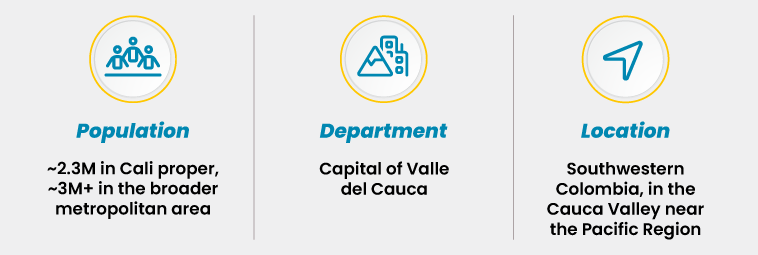
The third-largest city in the country, Cali has been gaining recognition as an emerging Colombian BPO, KPO, and IT hub. The city is attracting local and international companies across technology, business services, engineering, and other knowledge-intensive sectors, combining a sizable talent base, attractive operating environment, and growing technology ecosystem.
Cali’s southwestern location provides another advantage, linking the country’s major domestic markets with the Pacific. Direct access to the Port of Buenaventura further strengthens connectivity to the U.S. west coast, Asia, and other international markets.
Cali has made technology and innovation a central part of its economic development strategy, investing in talent development, access to financing, startup and business support, and digital transformation of government services that improve the ease of doing business. Cali has also emerged as a national leader in AI adoption: city government data reported a 28.5% AI adoption rate among businesses in the city, surpassing even Bogotá.
A broad education and workforce ecosystem supports that growth. Cali and its broader Valle del Cauca department offer a network of more than 33 higher education institutions and 26 bilingual schools – producing a steady pipeline of skilled, bilingual talent across business, engineering, technology, and professional services.
Public and private sector initiatives are expanding that pipeline further. Through Talento Tech Valle, approximately 5,000 scholarships have been awarded for intensive training in AI, data analytics, cybersecurity, cloud architecture, software development, and blockchain – with Valle del Cauca’s Ministry of ICT offering training and bootcamps across those areas. The Talento Tech program is part of a national initiative designed to fund specialization in high-demand digital skills.
Cali has also joined forces with private-sector employers on programs to strengthen English proficiency and bilingual workforce development. Its annual bilingual job fairs connect local English-speaking talent with local and multinational employers seeking candidates for technology, administrative, services, and BPO roles. 2025 marked the initiative’s eighth edition.
An important differentiator is Zonamerica Colombia – a substantial free trade zone dedicated to BPO, KPO, and tech operations. Located within the city’s university cluster, the 38-hectare business and technology park combines access to skilled talent with a Tier IV data center, scalable infrastructure, and an ecosystem that includes BPO, technology, engineering, and design operations.
Beyond traditional business and IT services, Cali is also developing a strategic niche in healthtech and applied AI. Fueled by universities and innovation centers, Cali has attracted advanced healthcare technology projects such as AI-assisted diagnostics, medical imaging processing, and disease prediction. Prominent locally developed solutions include CITOBOT, which uses AI to support cervical cancer screening.
Together, Cali’s expanding digital and bilingual talent base, specialized technology training, services-focused free trade zone, and growing innovation ecosystem make Cali an increasingly compelling nearshore outsourcing location for tech-enabled and knowledge-intensive business services.

Bucaramanga: At a Glance
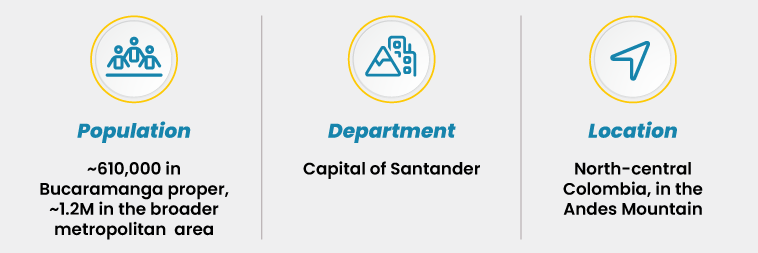
Smaller than Colombia’s major metropolitan centers, Bucaramanga is emerging as an attractive secondary location for outsourcing and knowledge-intensive services, combining a highly educated workforce, Colombia’s highest English proficiency, specialized outsourcing infrastructure, and a growing tech ecosystem.
The city supports a diverse range of higher-value activities, including BPO, KPO, software development, biomedical services, research and development, logistics, and precision manufacturing. Its workforce advantages are particularly notable: Bucaramanga ranks #1 among Colombian cities for English proficiency in the EF English Proficiency Index and placed #3 in higher education and workforce training in Colombia’s Cities Competitiveness Index.
That talent base is supported by the large number of high-quality education institutions in the city. Bucaramanga and the broader Santander department are home to Universidad Industrial de Santander, one of Colombia’s leading public universities, along with other universities and technical institutions supplying engineering, technology, scientific, and business talent.
Bucaramanga is also home to the Santander Free Trade Zone – Colombia’s first free trade zone focused on global services, outsourcing services, and export-oriented operations. The zone provides infrastructure specifically designed for international service delivery along with preferential tax and customs treatment.
The region’s digital services ecosystem is expanding as well. The Santander IT Cluster, made up of over 1,100 technology and software development companies, helps connect multinational employers with specialized talent, technology capabilities, and an increasingly mature network of digital services providers.
Connectivity is another developing advantage. Palonegro International Airport offers frequent service to Colombia’s major business centers, providing convenient onward connections to U.S. markets.
Bucaramanga also benefits from a supportive public-private business environment, including initiatives focused on investment attraction, internationalization, and helping local companies and professionals connect with global markets.
These advantages are positioning Bucaramanga as a compelling secondary nearshore outsourcing location for companies seeking specialized talent.
Other cities in Colombia to watch
Other regions and cities of Colombia are gaining attention as emerging nearshore markets. These secondary locations are relatively new markets that can offer companies access to expanding pools of top talent professionals in Colombia and specialized local capabilities, while broadening delivery options beyond the country’s largest outsourcing hubs.
- Pereira – The largest city in Colombia’s well-known Coffee Region, with a growing BPO and customer service sector and access to additional talent from nearby Manizales and Armenia.
- Manizales – A university-driven city in the Coffee Region with a strong pipeline of engineering, tech, and professional services talent, supporting growing opportunities in Colombian BPO, IT, and other knowledge-based services.
- Tunja – A standout for workforce quality, ranking #2 nationally for higher education and workforce training and #3 overall on the Cities Competitiveness Index.
- Cartagena – Combines a sizable service economy, strong international air and maritime connectivity, and experience supporting tourism, logistics, and multinational operations.
- Ibagué – Expanding its appeal through infrastructure development and tax incentives, with growing potential for back-office and business services operations.
- Neiva – A smaller market with an expanding education and services base, creating opportunities for targeted back-office and support functions.
These emerging locations are expanding Colombia’s nearshore footprint and giving companies more flexibility to match specific talent, operational cost, and operating requirements with the right city.
Why Auxis Grant Thornton: A leading nearshore partner in Colombia
Colombian cities are playing an increasingly important role in the global outsourcing market as companies look for the best talent in LATAM. Grant Thornton’s 2026 CFO Survey research found 44% of organizations are already operating in or evaluating the region as companies prioritize close collaboration, agility, and business alignment needed to support increasingly complex and time-sensitive work.
Recognized by leading analyst firms like Everest Group as one of the few global providers with a truly nearshore-centric delivery model, Auxis Grant Thornton combines deep industry expertise with a proven track record of delivering high-performing, AI-enabled nearshore operations across finance, IT, HR, customer support, and more. Its integrated Latin America platform spans Colombia’s major shared services markets – including delivery centers in Bogotá and Barranquilla and strategic hubs across Medellín and other key cities – while connecting clients to additional talent markets across Latin America and a broader global delivery network.
As Colombia’s delivery landscape continues to grow, the opportunity is no longer about choosing the “best” city. It’s about finding a partner that can build a multi-market delivery strategy, leveraging the distinct strengths of different locations to access the talent, capabilities, and innovation you need to modernize and scale in a rapidly evolving global marketplace.
Ready to see how Auxis can transform your operations with Colombia outsourcing? Schedule a consultation with our team today to discuss our tailored solutions, or visit our resource center for more nearshoring tips. strategies, and success stories.
Frequently Asked Questions
Which are the best nearshore cities in Colombia?
Why are businesses investing in BPO in Colombia?
Why are Colombia's top talent professionals attracting U.S. companies?
Where can companies find the best talent in LATAM for nearshoring operations?
